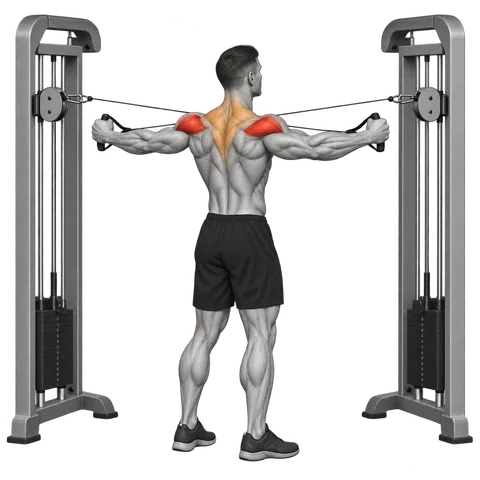
How to do the cable rear delt fly
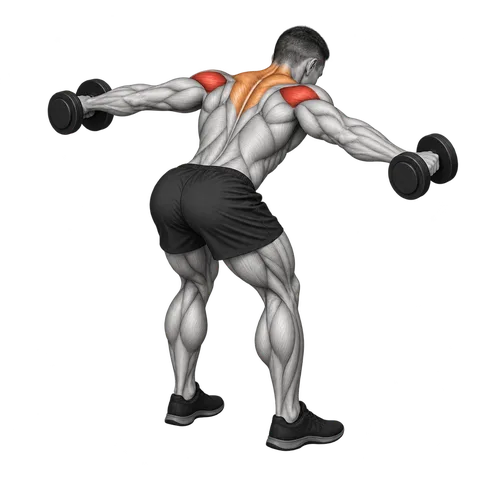
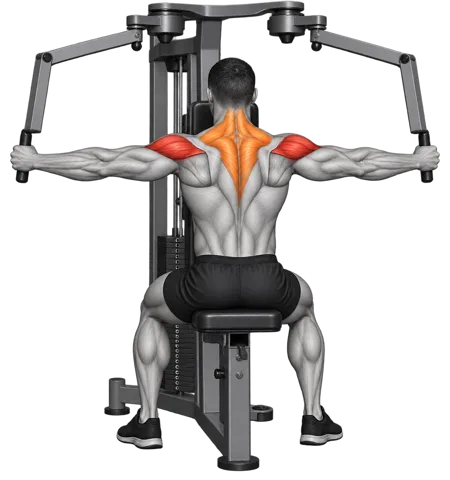
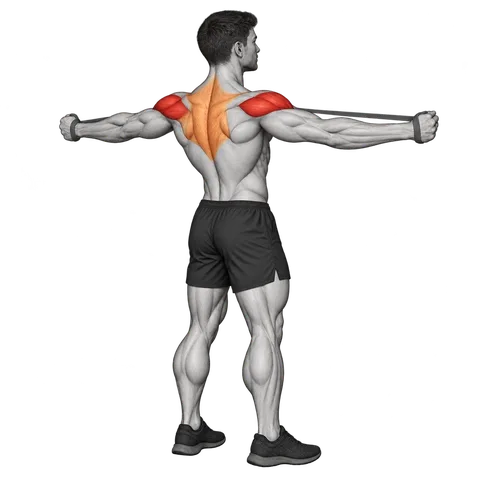
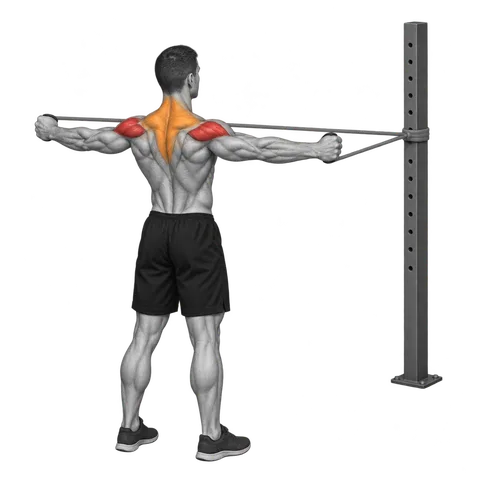
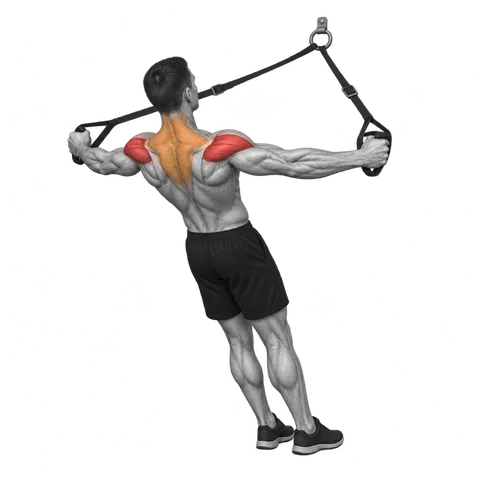
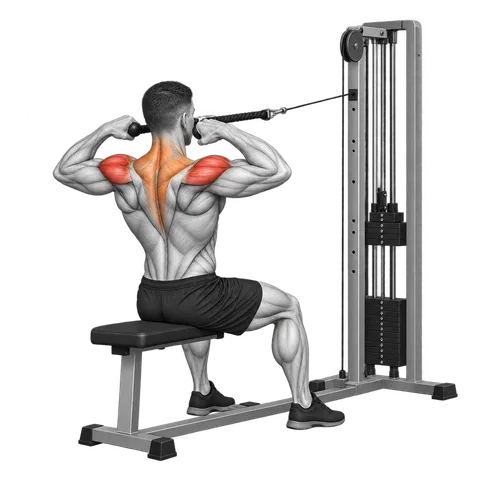
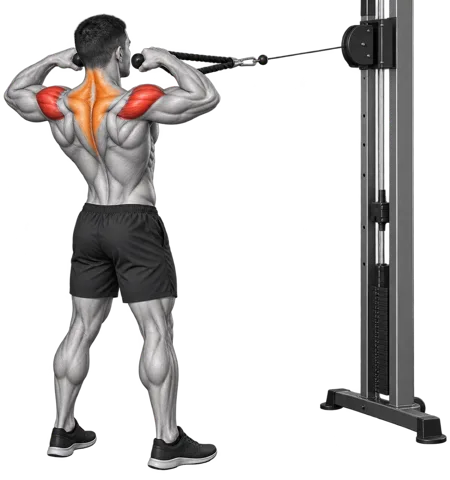
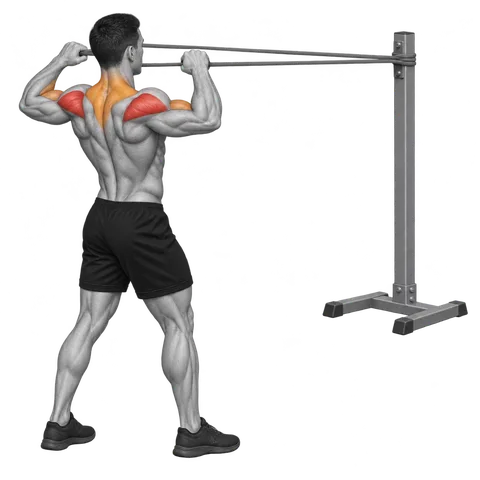
The cable rear delt fly is a standing fly between two cable stacks with crossed cables. It trains the rear delts, with the traps helping. It suits beginners who want rear delt work with steady tension.
Setup
- Set both pulleys at about shoulder height. Use the handle only, or attach a D-handle to each.
- Set the same light weight on both stacks.
- Hold the left cable in your right hand and the right cable in your left hand.
- Step back to the middle so the cables cross in front of your chest.
- Stand tall with a soft bend in your elbows.
One rep
- Brace your core and keep your shoulders down.
- Open your arms out and back in a wide arc.
- Stop when your arms are in line with your torso.
- Pause for a moment.
- Return your arms slowly to the crossed position.
Common mistakes
- Squeezing the shoulder blades hard together moves the work to the traps, so keep the move at the shoulders.
- Rocking the torso uses momentum, so stand still and use a lighter weight.
- Bending the elbows turns the fly into a row, so keep the same soft bend.
- Pulling the arms far behind the body loses tension, so stop when they line up with your torso.
Tips
- Breathe out as you open your arms and breathe in as you return.
- Take two to three seconds on the way back.
- Start light. Rear delts are small and work best with clean reps.
Sets and reps
Do 3 sets of 12 to 20 reps. Place it near the end of a shoulder or back workout.
Muscles worked
The main muscle is the rear delts. It also trains the traps. In FORCE, each set you log counts toward the recovery of the main muscle, and a share counts toward the helper muscles.
How FORCE coaches the cable rear delt fly
- Next-set weight. Log the weight, the reps and the reps you had left. FORCE gives the weight for your next set. How the coach works
- Recovery. Your sets update the ready time of the rear delts. Recovery in FORCE
- Warm-ups. FORCE plans warm-up sets from your working weight.
- Swaps. If a helper muscle is not ready, the coach suggests another exercise for the rear delts.