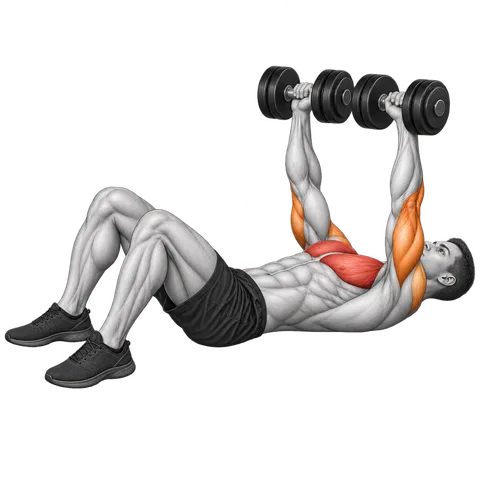
How to do the dumbbell floor press
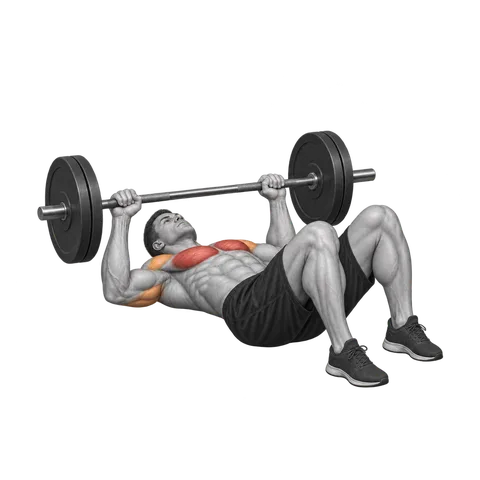
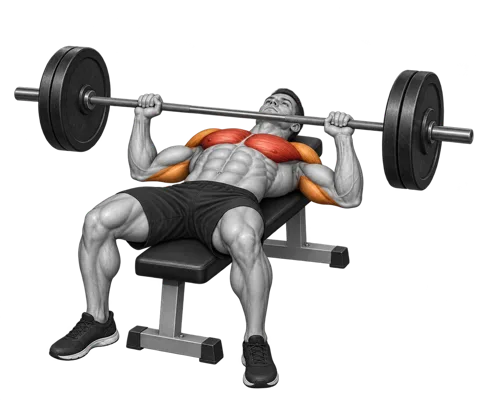
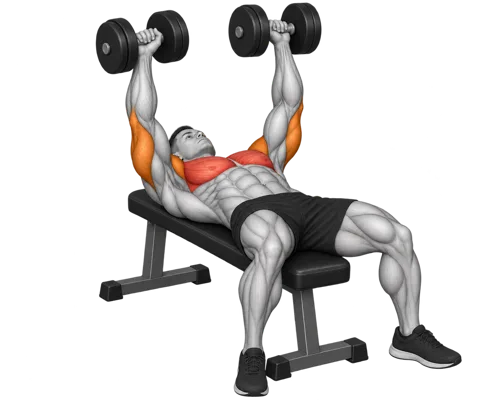
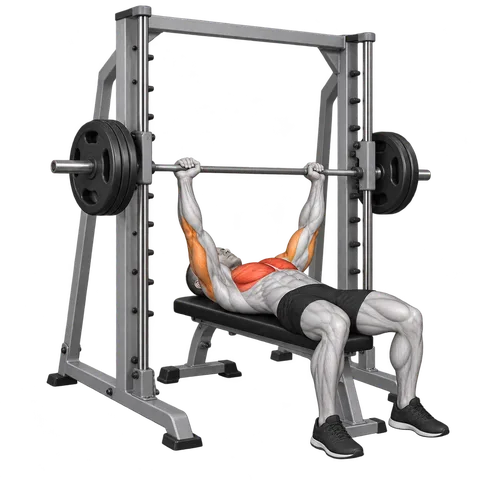
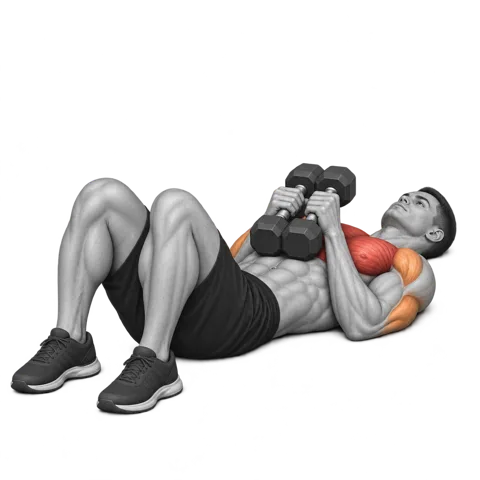
The dumbbell floor press is a chest press done lying on the floor instead of a bench. It trains the chest, with the triceps and front delts helping. The floor limits the depth, so it suits beginners and workouts with no bench.
Setup
- Sit on the floor with a dumbbell in each hand.
- Lie back with your knees bent and your feet flat.
- Press the dumbbells up over your chest.
- Keep your wrists stacked over your elbows.
One rep
- Brace your core.
- Lower the dumbbells until your upper arms touch the floor gently.
- Pause for a moment with your arms on the floor.
- Press the dumbbells back up over your chest.
- Lock out your arms before the next rep.
Common mistakes
- Bouncing the elbows off the floor removes control, so touch lightly and pause.
- Flaring the elbows out to 90 degrees loads the front of the shoulder, so keep them at about 45 degrees.
- Letting the wrists bend back weakens the press, so keep them stacked over your elbows.
- Losing tension at the bottom lets the shoulders roll forward, so keep your shoulder blades set against the floor.
Tips
- Breathe in as you lower and breathe out as you press.
- Keep the pause at the bottom. It removes the bounce and makes the press harder.
- Use neutral grip, palms facing in, if your shoulders prefer it.
Sets and reps
Do 3 to 4 sets of 8 to 12 reps. Use it as a main chest press in a workout with no bench.
Muscles worked
The main muscle is the chest. It also trains the triceps, front delts. In FORCE, each set you log counts toward the recovery of the main muscle, and a share counts toward the helper muscles.
How FORCE coaches the dumbbell floor press
- Next-set weight. Log the weight, the reps and the reps you had left. FORCE gives the weight for your next set. How the coach works
- Recovery. Your sets update the ready time of the chest. Recovery in FORCE
- Warm-ups. FORCE plans warm-up sets from your working weight.
- Swaps. If a helper muscle is not ready, the coach suggests another exercise for the chest.