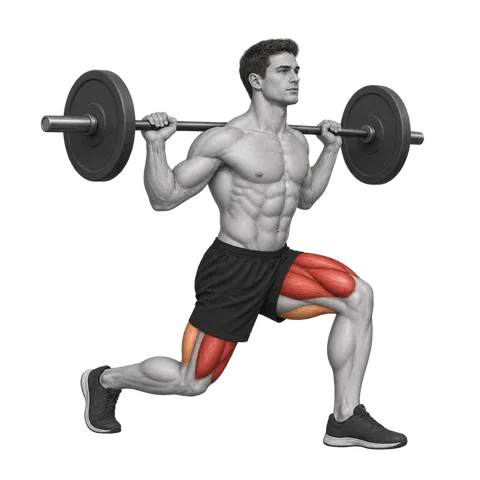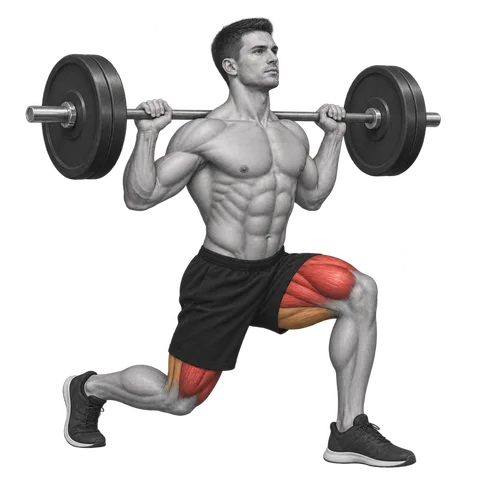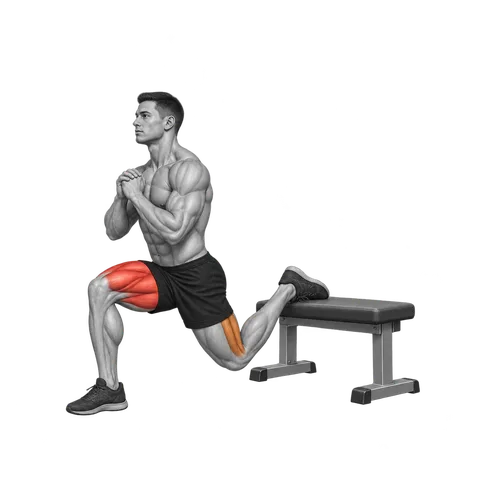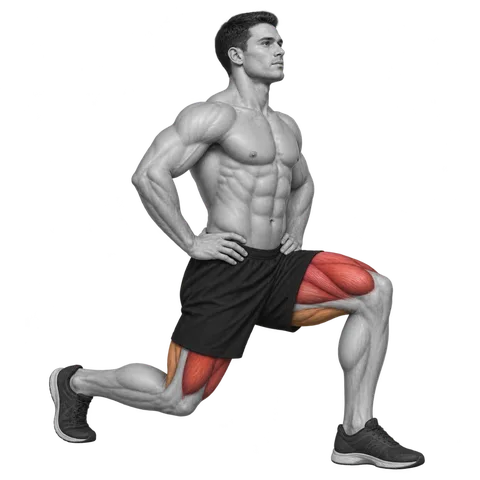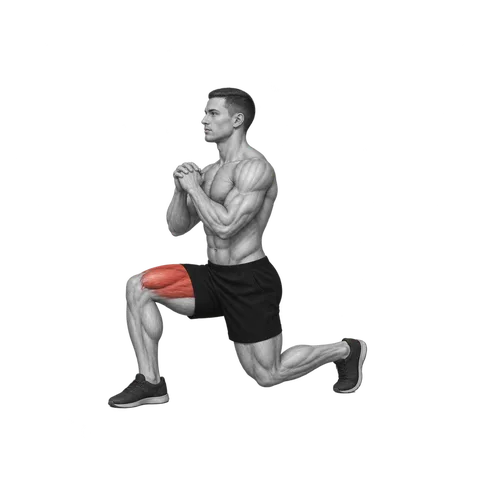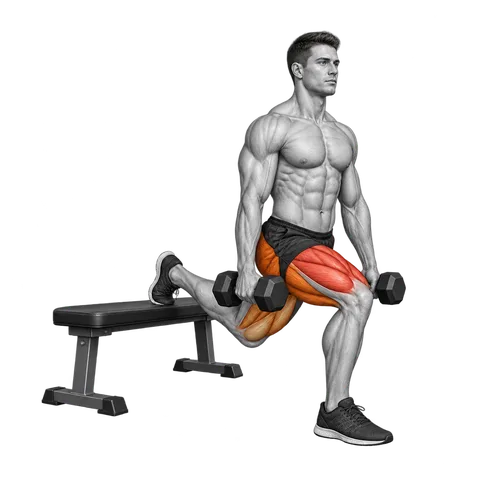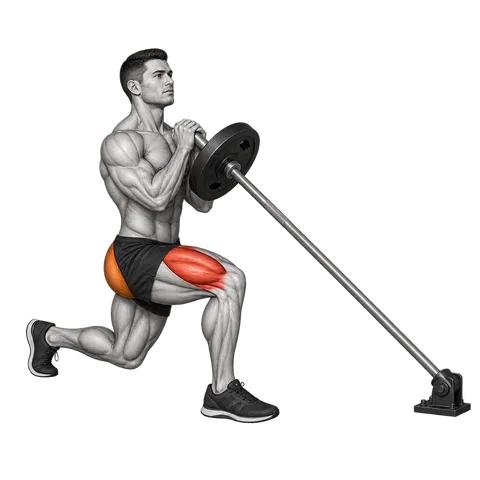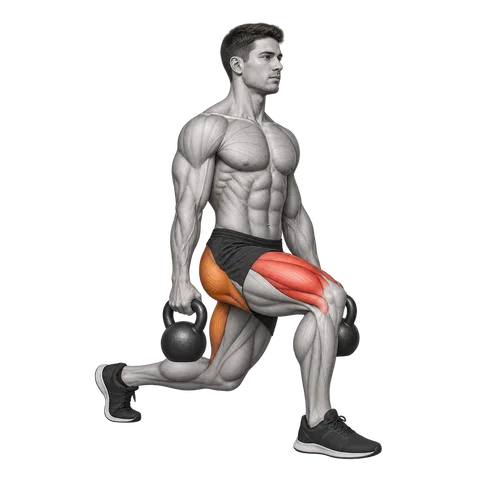
How to do the iso-lateral kettlebell reverse lunge
The kettlebell reverse lunge is a lunge where you step backward while holding a kettlebell beside each hip. It trains the quads, with the glutes and hamstrings helping, and you work one leg at a time. It suits beginners because stepping back is easier to balance than stepping forward.
Setup
- Pick two kettlebells of the same weight.
- Stand tall with your feet hip width apart.
- Hold one kettlebell beside each hip with your arms straight.
- Brace your trunk and set your shoulders down.
One rep
- Step one foot back into a long stride.
- Lower your rear knee toward the floor, keeping your front heel down.
- Stop when your rear knee is just above the floor.
- Drive through your front foot to step back up to standing.
- Repeat on the other side.
Common mistakes
- Letting the front heel lift, so keep your front foot flat and drive through it.
- Letting the front knee cave in, so keep it in line with your toes.
- Stepping back too short, so take a stride long enough for both knees to bend comfortably.
- Leaning far forward, so keep your torso fairly upright.
Tips
- Breathe in as you lower and breathe out as you stand.
- Pause for a moment at the bottom to control balance.
- Choose kettlebells you can hold for the whole set. Grip often limits this lift.
Sets and reps
Do 3 sets of 8 to 12 reps per leg. Use it after your main squat or as a main leg exercise for beginners.
Muscles worked
The main muscle is the quads. It also trains the glutes, hamstrings. In FORCE, each set you log counts toward the recovery of the main muscle, and a share counts toward the helper muscles.
How FORCE coaches the iso-lateral kettlebell reverse lunge
- Next-set weight. Log the weight, the reps and the reps you had left. FORCE gives the weight for your next set. How the coach works
- Recovery. Your sets update the ready time of the quads. Recovery in FORCE
- Warm-ups. FORCE plans warm-up sets from your working weight.
- Swaps. If a helper muscle is not ready, the coach suggests another exercise for the quads.