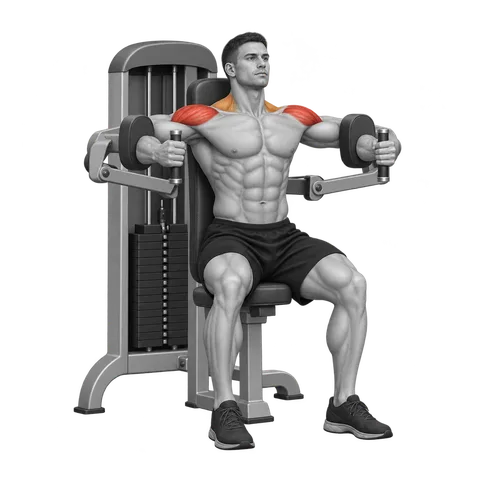
How to do the seated lateral raise
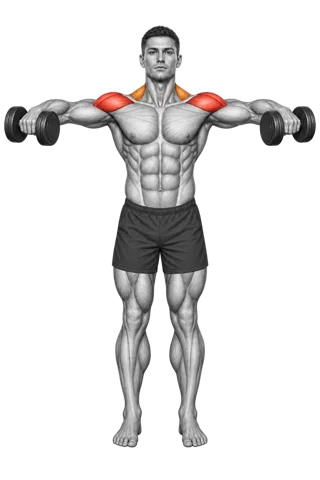
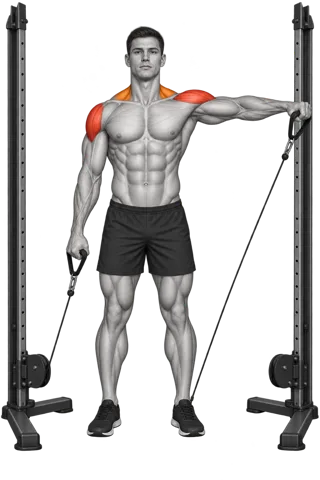
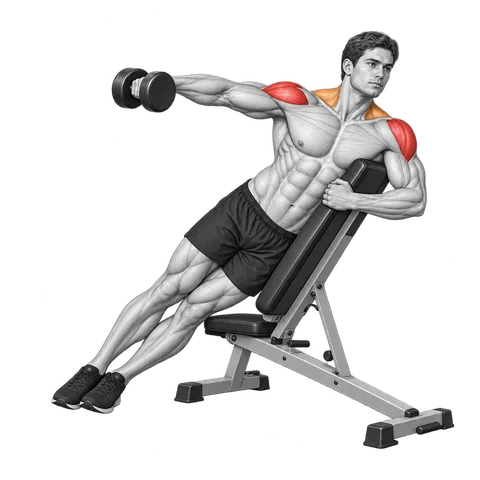
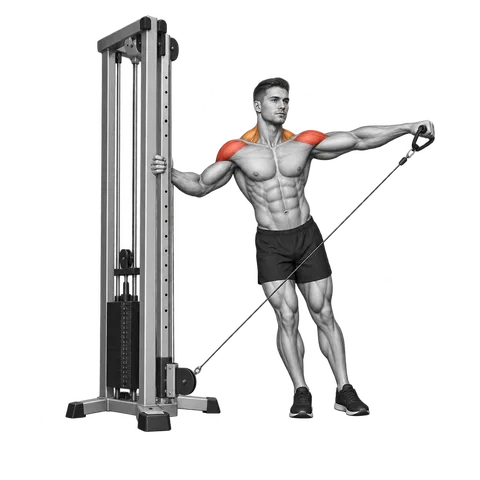
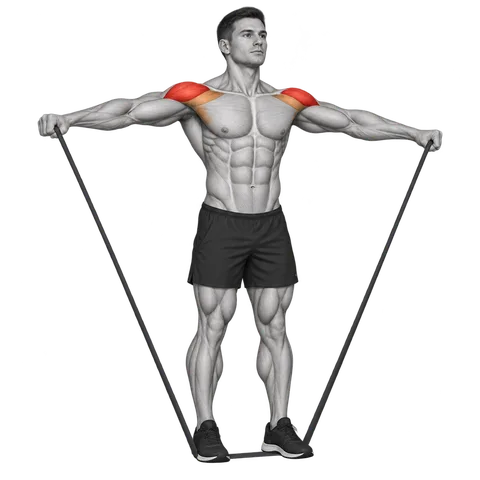
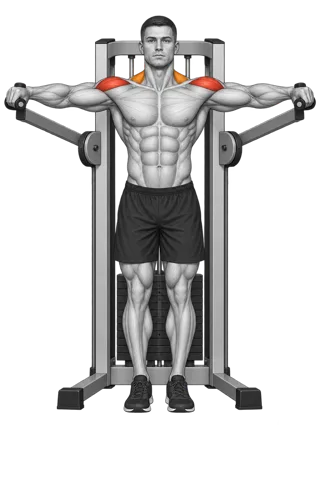
The seated lateral raise machine is a shoulder exercise where you sit with your arms against pads and raise them out to your sides. It trains the side delts, with the traps helping. It suits beginners because the seat and pads hold your body still.
Setup
- Set the pin in the weight stack at your chosen load.
- Adjust the seat so your shoulders line up with the machine's pivot points.
- Sit with your back or chest against the pad, as the machine is built.
- Place your arms against the pads or grip the handles with a slight bend in your elbows.
One rep
- Brace your stomach and keep your shoulders down.
- Raise your arms out to your sides.
- Stop when your upper arms reach shoulder height.
- Pause for a moment at the top.
- Lower your arms slowly back to the start.
Common mistakes
- Shrugging the shoulders up, so keep them down and lead with your elbows.
- Setting the seat so the shoulders sit below or above the pivot, so adjust until they line up.
- Raising the arms above shoulder height, so stop when they are level with your shoulders.
- Letting the stack crash on the way down, so lower over two to three seconds.
Tips
- Breathe out as you raise and breathe in as you lower.
- Push the pads out with your elbows, not up with your hands.
- Choose a weight you can pause with at the top of each rep.
Sets and reps
Do 3 sets of 12 to 20 reps. Use it after your overhead press on shoulder or push day.
Muscles worked
The main muscle is the side delts. It also trains the traps. In FORCE, each set you log counts toward the recovery of the main muscle, and a share counts toward the helper muscles.
How FORCE coaches the seated lateral raise
- Next-set weight. Log the weight, the reps and the reps you had left. FORCE gives the weight for your next set. How the coach works
- Recovery. Your sets update the ready time of the side delts. Recovery in FORCE
- Warm-ups. FORCE plans warm-up sets from your working weight.
- Swaps. If a helper muscle is not ready, the coach suggests another exercise for the side delts.