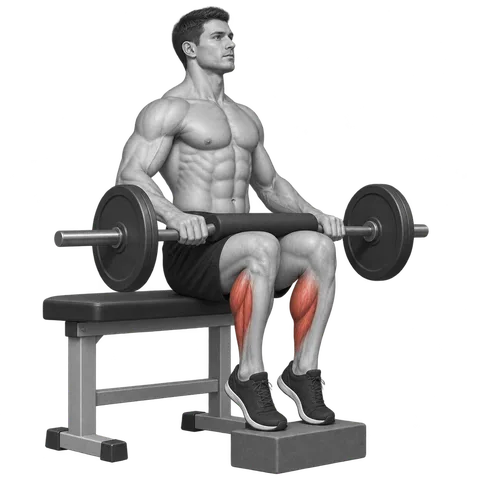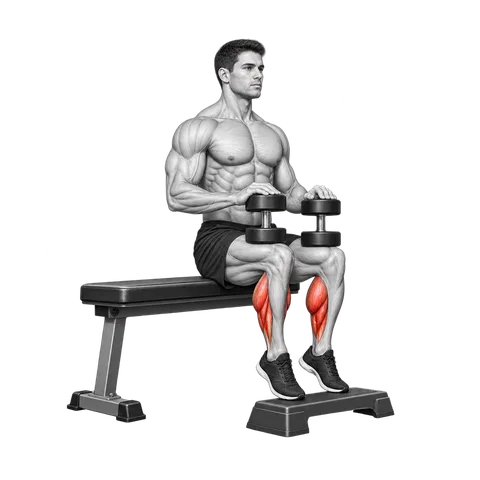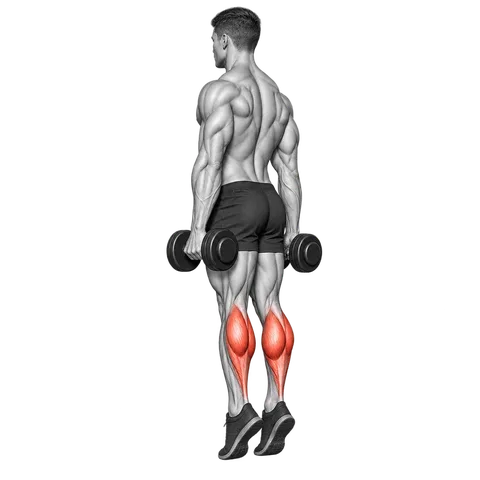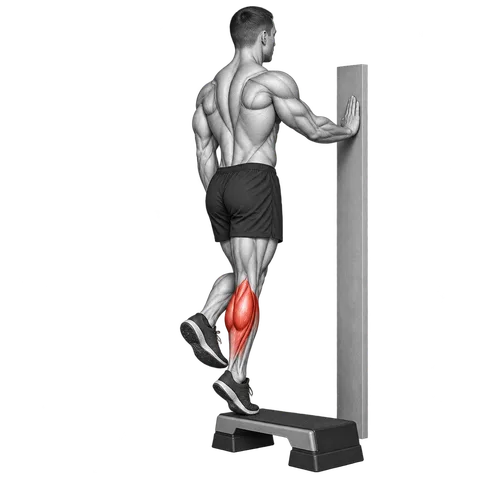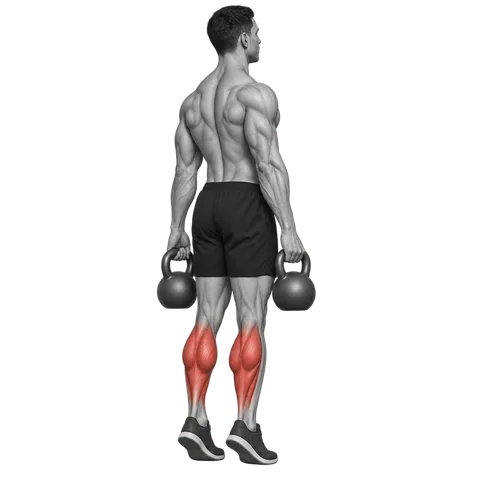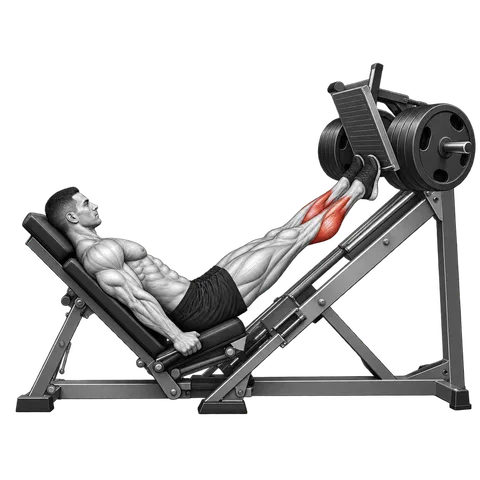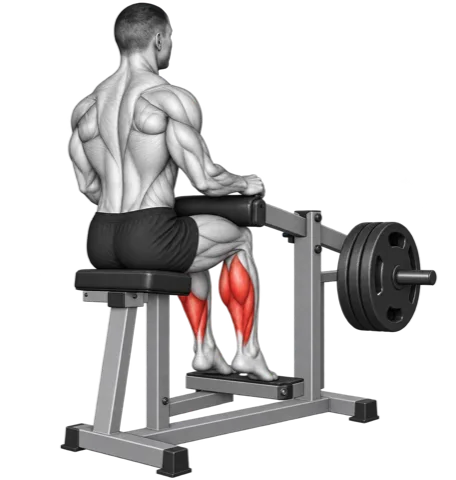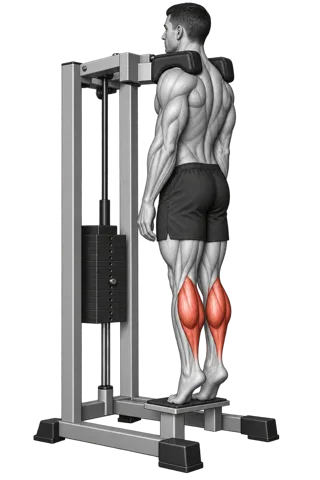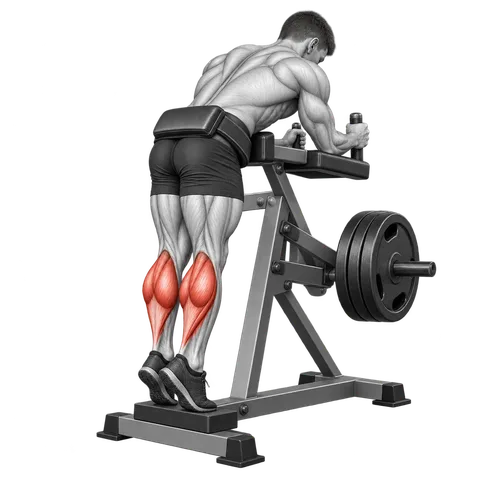
How to do the donkey calf raise
The donkey calf raise is a calf raise on a plate-loaded machine with your hips bent and your torso leaning forward. It trains the calves. The bent hip position gives a deep calf stretch, so it suits beginners who want full range calf work.
Setup
- Load the plates and check that they are secure.
- Step onto the platform with the balls of your feet on the edge.
- Lean forward with your hips bent and place your hips or lower back under the pad.
- Hold the handles and keep your knees straight or slightly bent.
One rep
- Lower your heels slowly as far as they go.
- Hold the stretch for a moment.
- Rise onto your toes as high as you can.
- Squeeze your calves at the top for a moment.
- Lower slowly back into the stretch.
Common mistakes
- Bouncing out of the bottom takes tension off the calves, so pause in the stretch.
- Bending the knees to push the weight brings in the legs, so keep your knee angle fixed.
- Rolling onto the outside of the foot shifts the load, so push through the big toe and the ball of the foot.
- Using a short range to move more weight cuts the calf work, so go from a full stretch to a full rise.
Tips
- Breathe out as you rise and breathe in as you lower.
- Take two seconds on the way down and pause for one to two seconds in the stretch.
- Pick a weight you can lift through the full range on every rep.
Sets and reps
Do 3 to 4 sets of 10 to 15 reps. Place it at the end of a leg workout.
Muscles worked
The main muscle is the calves. In FORCE, each set you log counts toward the recovery of the main muscle, and a share counts toward the helper muscles.
How FORCE coaches the donkey calf raise
- Next-set weight. Log the weight, the reps and the reps you had left. FORCE gives the weight for your next set. How the coach works
- Recovery. Your sets update the ready time of the calves. Recovery in FORCE
- Warm-ups. FORCE plans warm-up sets from your working weight.
- Swaps. If a helper muscle is not ready, the coach suggests another exercise for the calves.