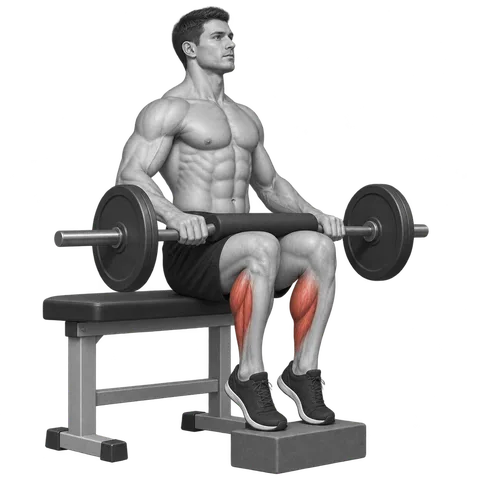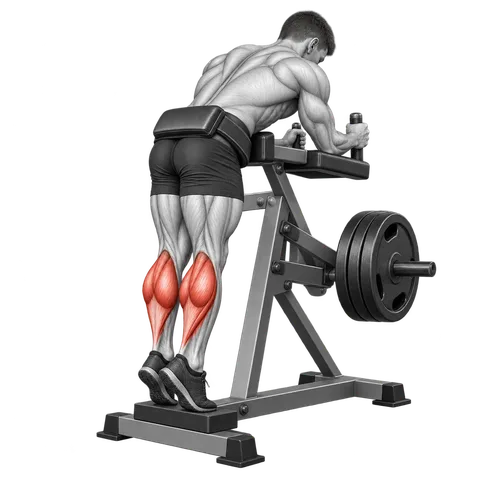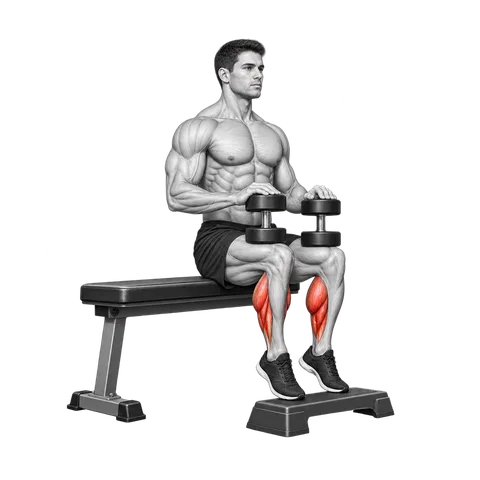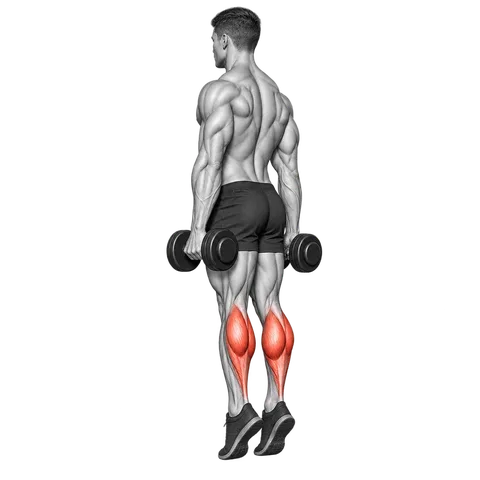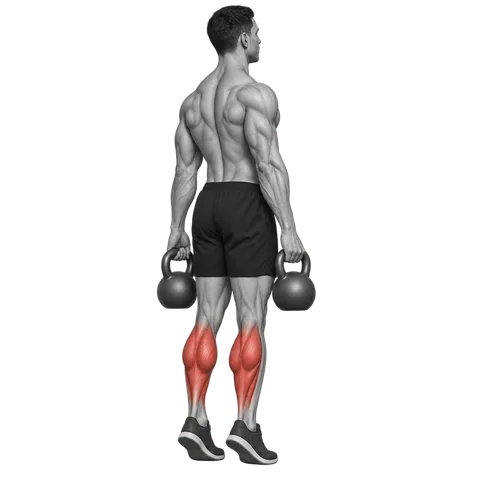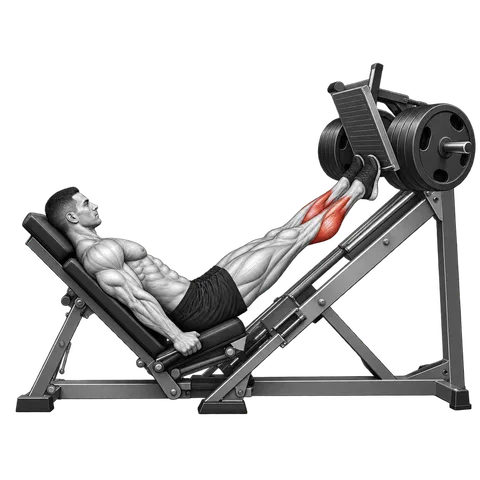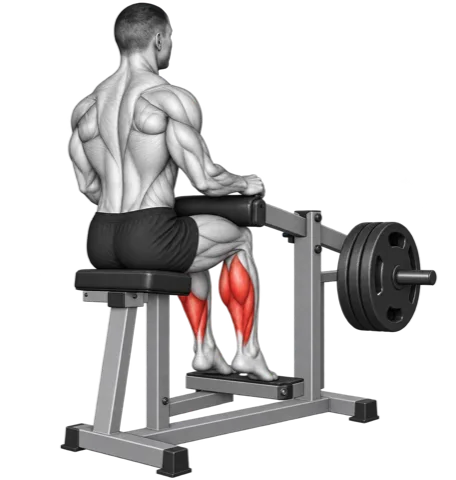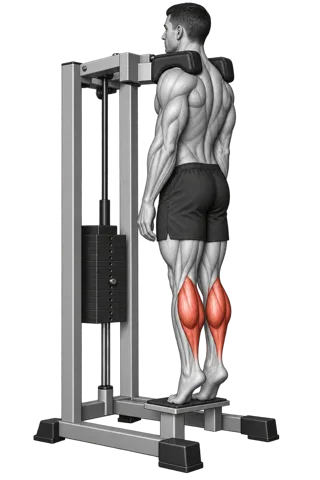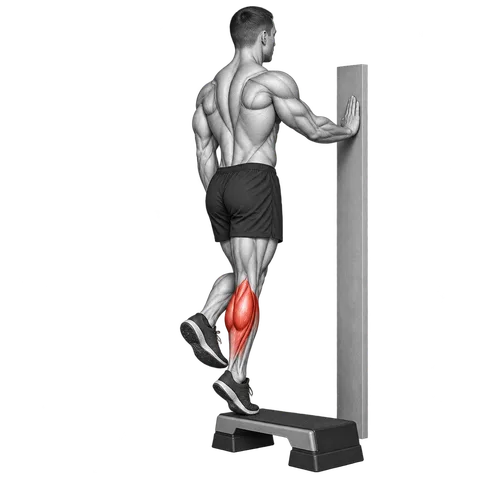
How to do the iso-lateral standing calf raise
The single-leg standing calf raise is a calf exercise where you rise onto the toes of one foot from a raised edge. It trains the calves with only your bodyweight, and one leg at a time makes it hard enough for most lifters. It suits beginners and needs only a step and something to hold.
Setup
- Stand on a stable step or plate with the ball of one foot on the edge.
- Let your heel hang off the edge.
- Hold a wall, rack or rail for balance.
- Lift your other foot off the step and stand tall.
One rep
- Lower your heel slowly below the edge until you feel a stretch in your calf.
- Pause for a moment at the bottom.
- Rise as high as you can onto your toes.
- Squeeze your calf at the top for one second.
- Finish your reps, then switch legs.
Common mistakes
- Bouncing out of the bottom, so pause in the stretch before each rise.
- Letting the ankle roll in or out, so keep your weight over the ball of your foot behind the big toe.
- Using short reps at the top only, so lower fully and rise fully each time.
- Pulling with your hands, so use your support only for balance.
Tips
- Breathe out as you rise and breathe in as you lower.
- Use a slow 2 to 3 second lowering phase.
- When 20 clean reps are easy, hold a dumbbell in the free hand.
Sets and reps
Do 3 sets of 12 to 20 reps per leg. Place it at the end of a leg session.
Muscles worked
The main muscle is the calves. In FORCE, each set you log counts toward the recovery of the main muscle, and a share counts toward the helper muscles.
How FORCE coaches the iso-lateral standing calf raise
- Next-set weight. Log the weight, the reps and the reps you had left. FORCE gives the weight for your next set. How the coach works
- Recovery. Your sets update the ready time of the calves. Recovery in FORCE
- Warm-ups. FORCE plans warm-up sets from your working weight.
- Swaps. If a helper muscle is not ready, the coach suggests another exercise for the calves.