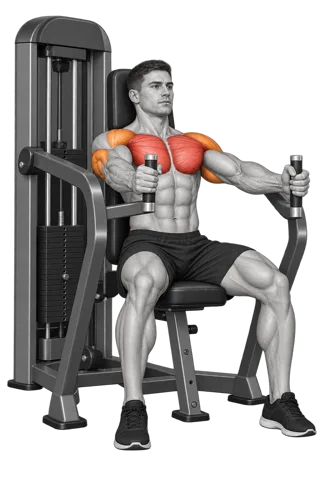
How to do the neutral grip chest press
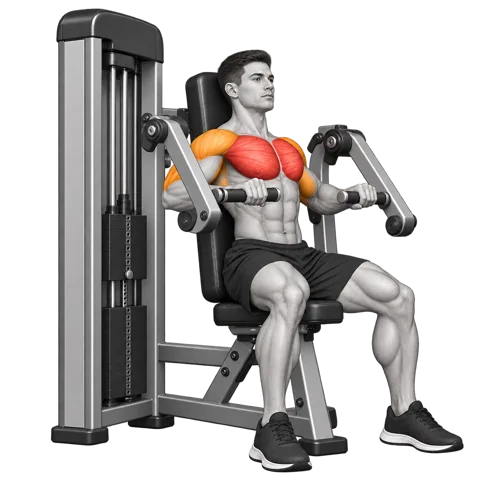
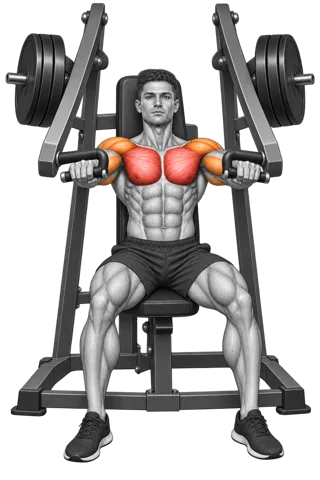
The neutral grip chest press is a pin-loaded machine press with handles where your palms face each other. It trains the chest, with the triceps and front delts helping. It suits beginners and anyone who finds a neutral grip more comfortable for the shoulders and wrists than a flat bar.
Setup
- Set the pin in the weight stack at your chosen load.
- Adjust the seat so the handles start around the middle of your chest.
- Sit with your back flat against the pad and your feet flat on the floor.
- Grip the neutral handles with your palms facing each other.
- Pull your shoulders down and back against the pad.
One rep
- Take a breath and brace your stomach.
- Press the handles forward under control.
- Stop just before your elbows lock.
- Let the handles return slowly toward you.
- Stop when your elbows are slightly behind your torso and you feel a stretch in the chest.
Common mistakes
- Setting the seat too low so the handles start near the shoulders, so raise or lower the seat until the handles line up with mid-chest.
- Shrugging the shoulders up as you press, so keep your shoulders down and back on the pad.
- Locking the elbows hard at the end, so stop the press just short of full lockout.
- Letting the stack crash on the return, so lower the handles over about two seconds.
Tips
- Breathe out as you press and breathe in as the handles come back.
- Keep your wrists straight and stacked over your forearms.
- Choose a weight you can press for all reps without your back leaving the pad.
Sets and reps
Do 3 to 4 sets of 8 to 12 reps. Use it as the main chest press or after a free-weight bench press.
Muscles worked
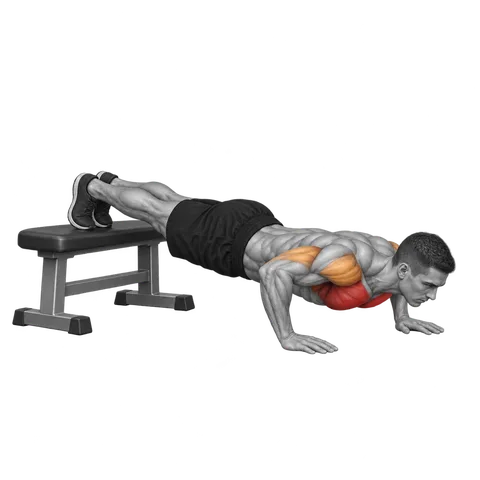
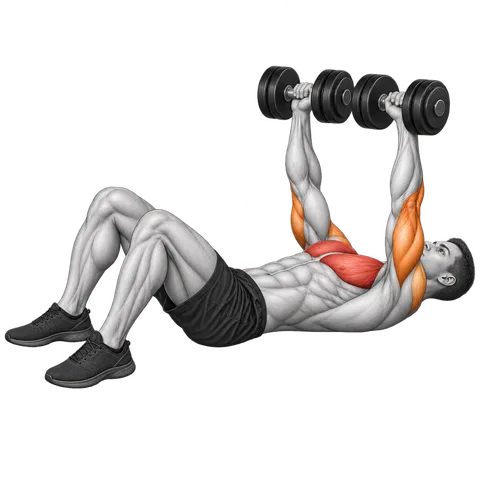
The main muscle is the chest. It also trains the triceps, front delts. In FORCE, each set you log counts toward the recovery of the main muscle, and a share counts toward the helper muscles.
How FORCE coaches the neutral grip chest press
- Next-set weight. Log the weight, the reps and the reps you had left. FORCE gives the weight for your next set. How the coach works
- Recovery. Your sets update the ready time of the chest. Recovery in FORCE
- Warm-ups. FORCE plans warm-up sets from your working weight.
- Swaps. If a helper muscle is not ready, the coach suggests another exercise for the chest.