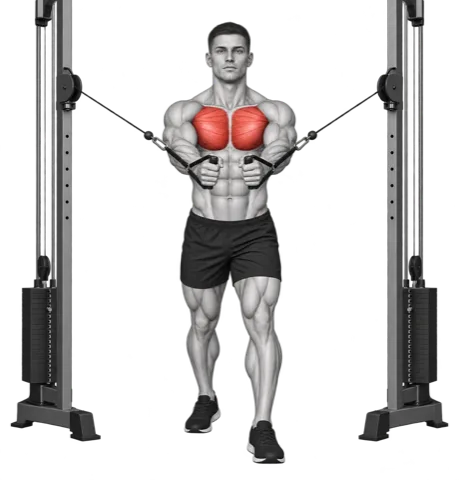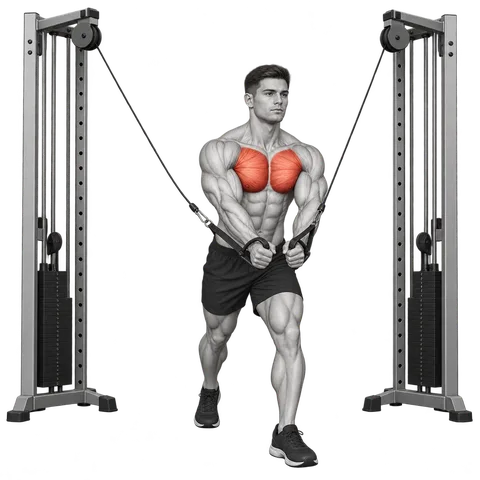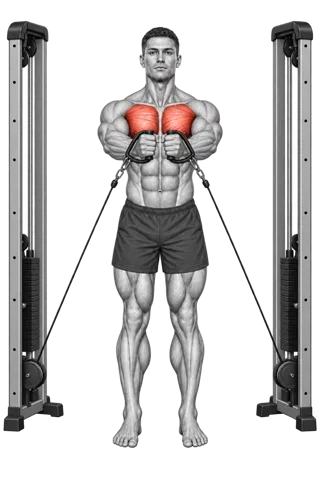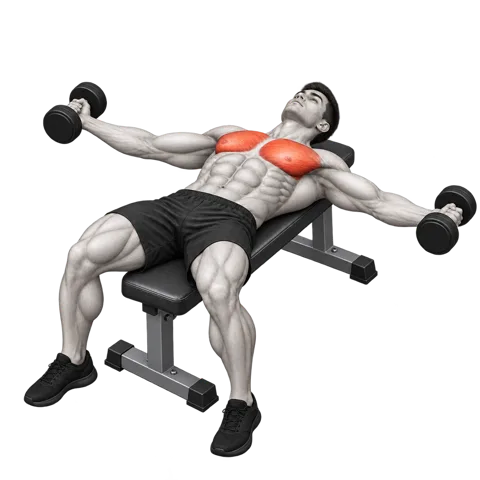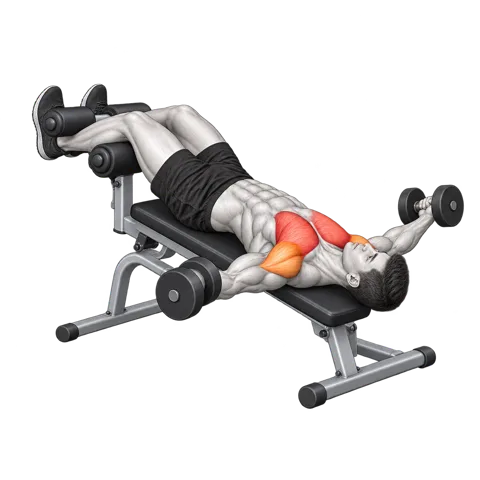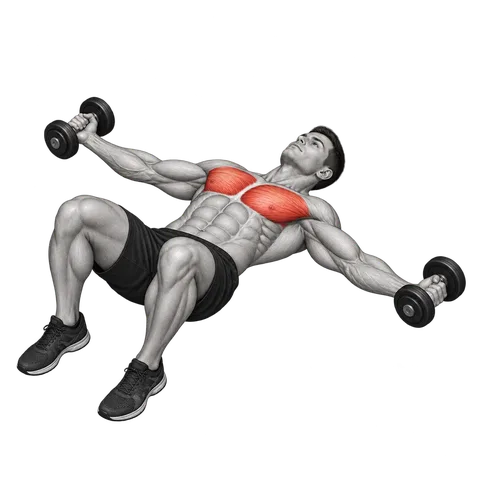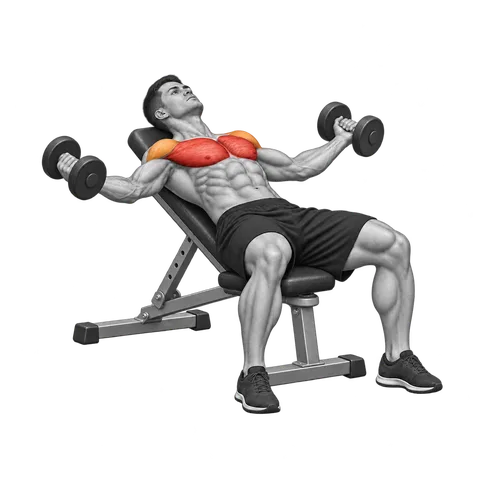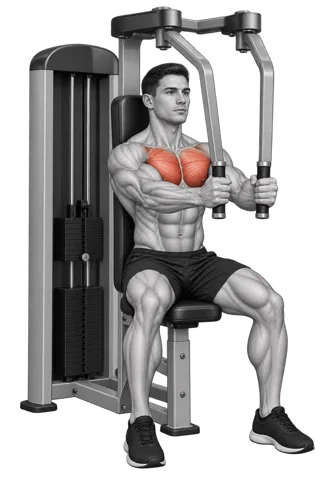
How to do the chest fly
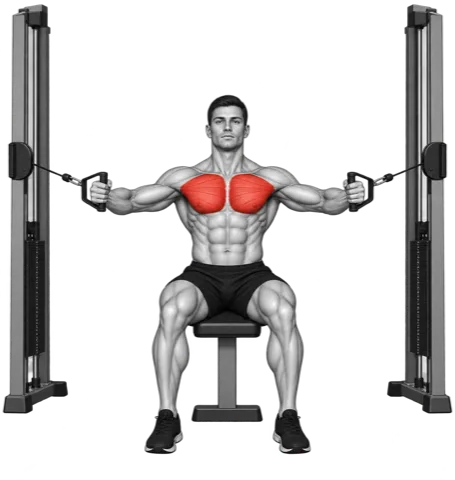
The machine chest fly is a seated fly on a pec deck machine. It trains the chest. The machine guides the arc and keeps tension on the chest, so it suits beginners who want chest isolation.
Setup
- Adjust the seat height so the handles line up with your mid-chest.
- Set the arm start position so you feel a stretch, not strain, at the start.
- Set the selector pin to your working weight.
- Sit with your back flat against the pad and grip the handles with a slight bend in your elbows.
One rep
- Brace your core and keep your shoulders down.
- Bring the handles together in front of your chest in a wide arc.
- Squeeze your chest when the handles meet.
- Pause for a moment.
- Open your arms under control back to the stretch.
Common mistakes
- Setting the seat too low or too high moves the load to the shoulders, so line the handles up with your mid-chest.
- Leaning off the back pad uses momentum, so keep your back against the pad.
- Letting the stack slam between reps removes control, so stop just before the plates touch.
- Bending and straightening the elbows turns the fly into a press, so keep the same slight bend.
Tips
- Breathe out as you bring the handles together and breathe in as you open.
- Take two to three seconds on the way back.
- Pick a weight you can hold for one second with the handles together.
Sets and reps
Do 3 sets of 10 to 15 reps. Place it after your main chest presses.
Muscles worked
The main muscle is the chest. In FORCE, each set you log counts toward the recovery of the main muscle, and a share counts toward the helper muscles.
How FORCE coaches the chest fly
- Next-set weight. Log the weight, the reps and the reps you had left. FORCE gives the weight for your next set. How the coach works
- Recovery. Your sets update the ready time of the chest. Recovery in FORCE
- Warm-ups. FORCE plans warm-up sets from your working weight.
- Swaps. If a helper muscle is not ready, the coach suggests another exercise for the chest.