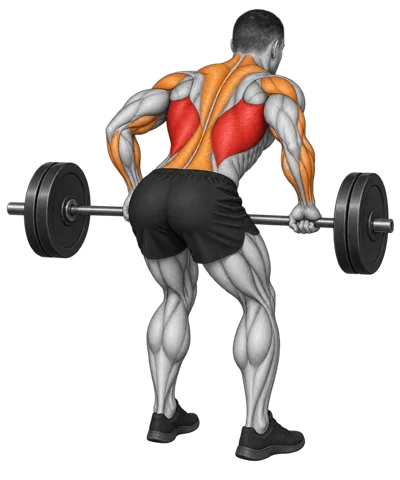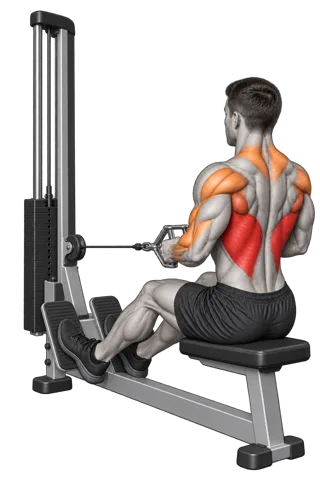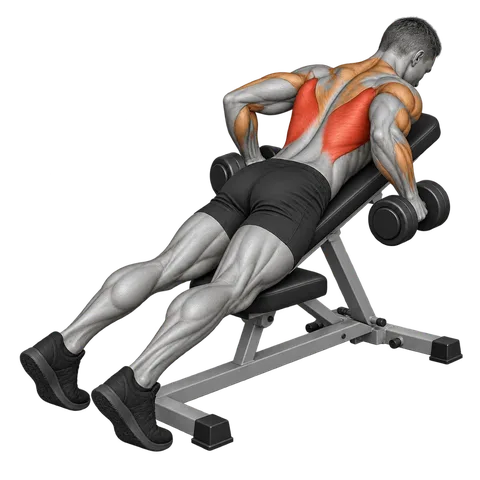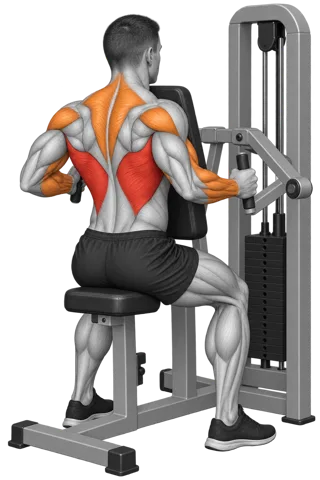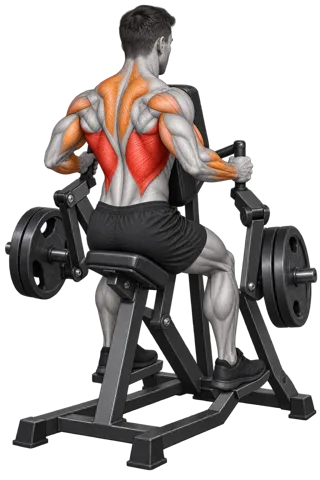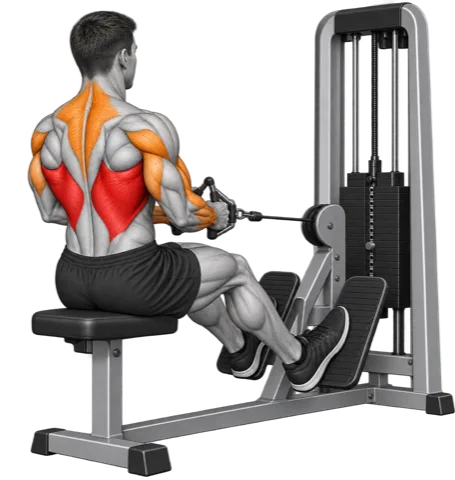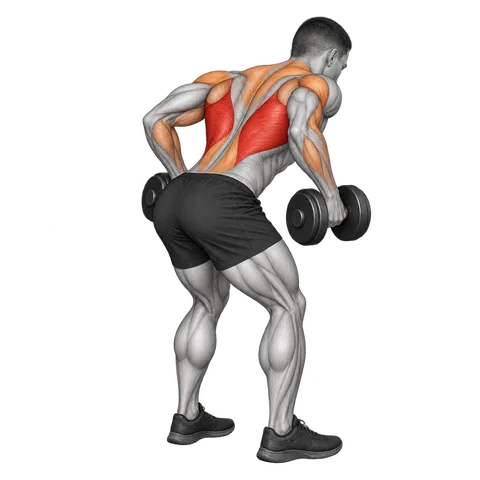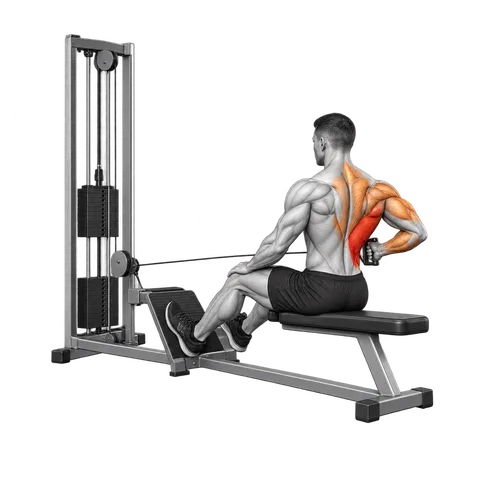
How to do the iso-lateral cable row
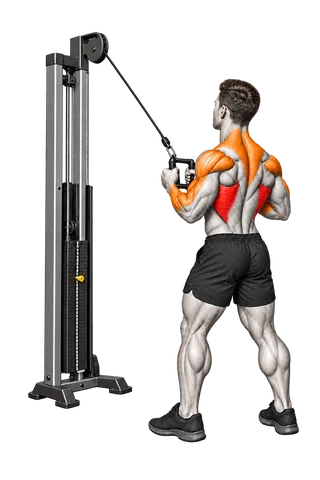
The single-arm cable row is a row done one arm at a time with a D-handle on a cable. It trains the lats, with the traps, rear delts, biceps and forearms helping. It suits beginners and anyone who wants each side of the back to work on its own.
Setup
- Set a pulley at a low or middle height and attach a single D-handle.
- Sit at a seated row station, or stand in a split stance facing the stack.
- Grip the handle with a neutral grip and reach forward until your arm is straight.
- Brace your trunk and keep your chest up and square to the stack.
One rep
- Start with a stretch in your lat while your torso stays still.
- Row your elbow back toward your hip and lower ribs.
- Squeeze your back at the end of the pull.
- Return the handle slowly until your arm is straight.
- Finish your reps on one arm, then switch arms.
Common mistakes
- Twisting the torso to move the weight, so keep your chest square and use a lighter load.
- Shrugging the shoulder up as you pull, so keep it down and drive your elbow back.
- Cutting the stretch short, so let your arm reach fully forward on each rep.
- Leaning back to finish the pull, so keep your torso still.
Tips
- Breathe out as you pull and breathe in as you return.
- Pause for one second at the end of each pull.
- Start with your weaker arm and match its reps on the stronger arm.
Sets and reps
Do 3 sets of 10 to 12 reps per arm. Use it after your main row or pulldown in a back session.
Muscles worked
The main muscle is the lats. It also trains the traps, rear delts, biceps, forearms. In FORCE, each set you log counts toward the recovery of the main muscle, and a share counts toward the helper muscles.
How FORCE coaches the iso-lateral cable row
- Next-set weight. Log the weight, the reps and the reps you had left. FORCE gives the weight for your next set. How the coach works
- Recovery. Your sets update the ready time of the lats. Recovery in FORCE
- Warm-ups. FORCE plans warm-up sets from your working weight.
- Swaps. If a helper muscle is not ready, the coach suggests another exercise for the lats.