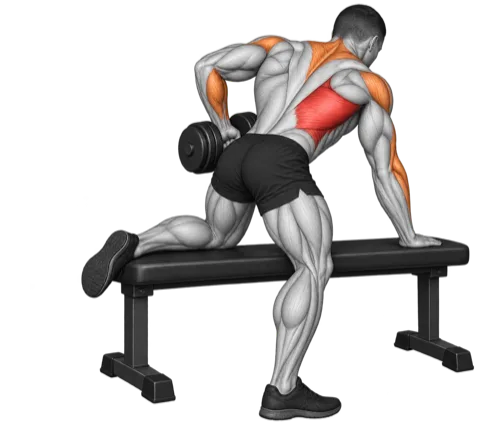
How to do the iso-lateral dumbbell row
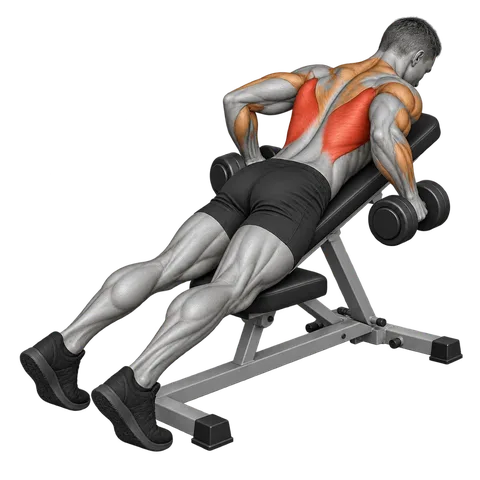
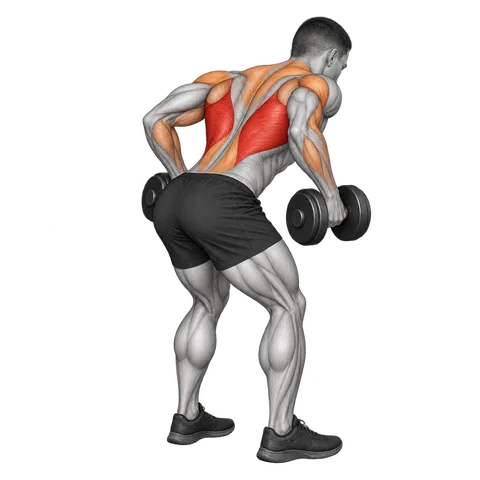
The one-arm dumbbell row is a row with one hand and one knee on a bench for support. It trains the lats and upper back, with the traps, rear delts, biceps and forearms helping. It suits intermediate lifters who want to load each side of the back on its own.
Setup
- Place one knee and the same-side hand on a flat bench.
- Plant your other foot on the floor out to the side for balance.
- Hold a dumbbell in your free hand with the arm hanging straight below your shoulder.
- Keep your back flat, about parallel to the floor, with your shoulders square.
One rep
- Brace your trunk.
- Pull the dumbbell up toward your hip, driving the elbow back close to your body.
- Squeeze your back at the top.
- Lower the dumbbell slowly until your arm is straight and you feel a stretch.
- Finish your reps, then switch sides.
Common mistakes
- Turning the torso open to lift the weight, so keep your shoulders square to the floor.
- Pulling the dumbbell to your chest with the elbow flared out, so pull toward your hip to keep the load on the lats.
- Rounding the back, so keep it flat from hips to head.
- Jerking the weight up, so start each pull smoothly from a full stretch.
Tips
- Breathe out as you pull and breathe in as you lower.
- Pause for one second at the top of each rep.
- Use straps if your grip fails before your back does.
Sets and reps
Do 3 to 4 sets of 8 to 12 reps per arm. Use it as a main row or after a heavier barbell row.
Muscles worked
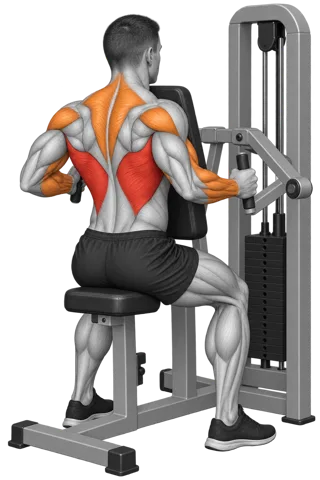
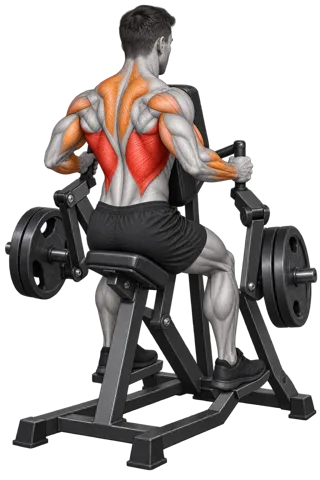
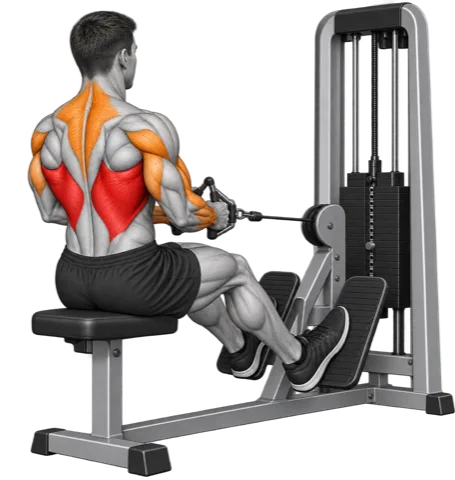
The main muscle is the lats. It also trains the traps, rear delts, biceps, forearms. In FORCE, each set you log counts toward the recovery of the main muscle, and a share counts toward the helper muscles.
How FORCE coaches the iso-lateral dumbbell row
- Next-set weight. Log the weight, the reps and the reps you had left. FORCE gives the weight for your next set. How the coach works
- Recovery. Your sets update the ready time of the lats. Recovery in FORCE
- Warm-ups. FORCE plans warm-up sets from your working weight.
- Swaps. If a helper muscle is not ready, the coach suggests another exercise for the lats.